
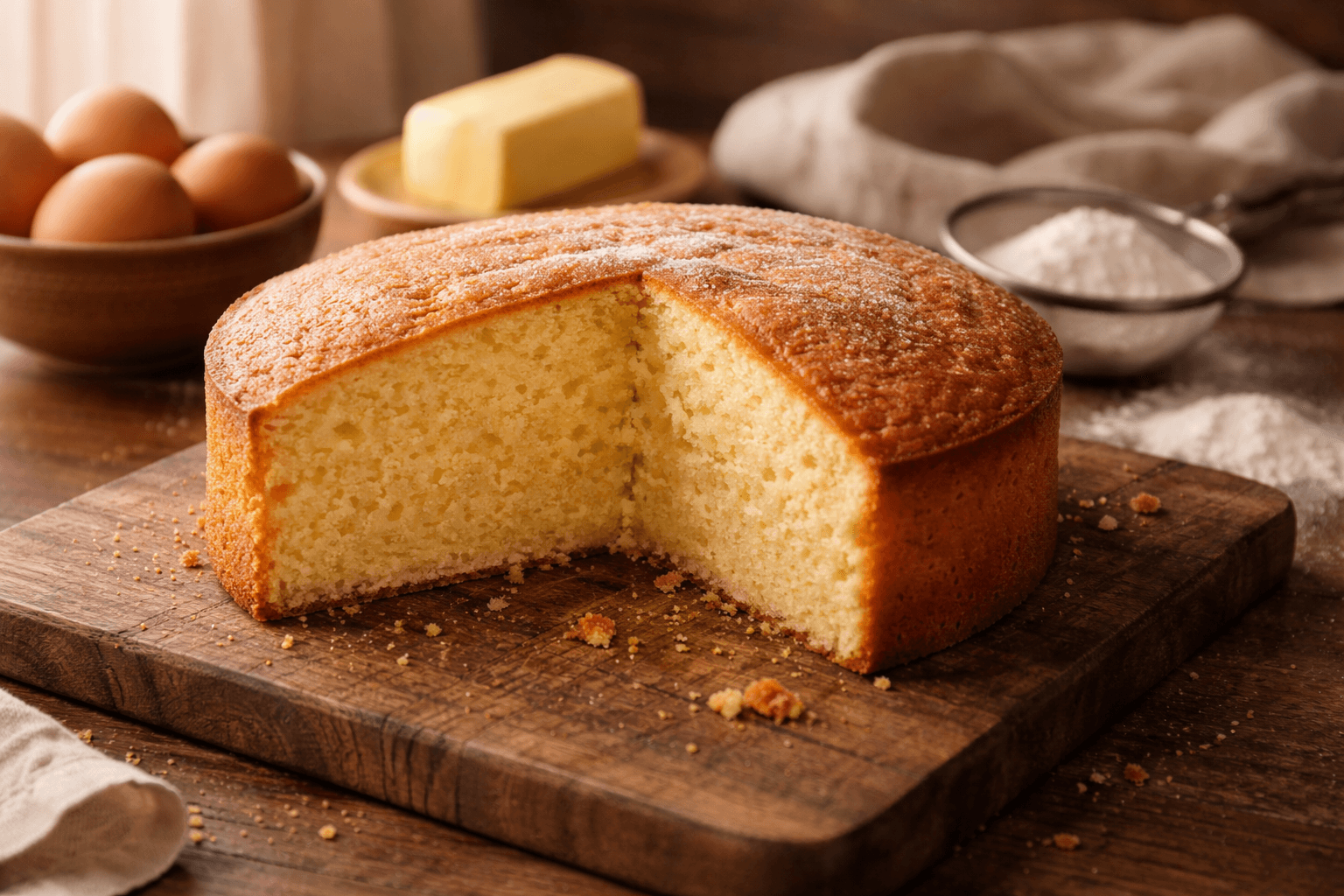
What Makes a Sponge Cake Moist — 3 Key Factors Explained
What Makes a Sponge Cake Moist?
A moist sponge cake is every baker's dream. But why does the same recipe produce a tender, moist result for one person and a dry or gummy one for another? It's not about luck — it's about understanding three fundamental factors that determine sponge cake texture.
1. Moisture and Fat Balance with Sugar
Sponge cake moisture depends on two categories of ingredients: water and water-based components (milk, buttermilk, juice, eggs) and fats with sugars (butter, oil, sugar, honey).
The principle is straightforward:
- The more of these components — the moister the sponge. Water is retained within the batter structure, fats coat flour particles, and sugar binds moisture and prevents evaporation.
- Too much of them — and the sponge becomes gummy and dense. Excess moisture prevents the structure from setting, and too much fat makes the crumb heavy.
Golden rule: follow the recipe proportions, and if you want a moister sponge — add slightly more fat (10–15% above the norm) or replace some of the water with syrup. But always maintain the balance.
2. Mixing Technique — How Much Air You Incorporate
This is a factor people often overlook, yet it dramatically affects the texture.
The logic is simple:
- The more air you whip into the batter — the drier the sponge will be. Air bubbles create a porous structure through which moisture evaporates faster during baking.
- Less air — means a denser, moister result.
That's precisely why:
- Classic sponge (génoise), where eggs are whipped at length to a foam — comes out light and airy, but on the drier side. It's typically soaked with syrup.
- Butter cake, where ingredients are simply mixed together — is denser, but significantly moister on its own.
Tip: if your sponge always turns out dry — try reducing the whipping time or switch to a method where eggs are added to a butter base rather than whipped separately.
3. Baking Temperature
The third factor is choosing the right temperature for each type of sponge.
- Too high a temperature — the outside sets quickly into a crust while the inside stays raw. Or the opposite — it dries out because moisture evaporates too intensely.
- Too low a temperature — the sponge sits in the oven too long, losing moisture. The result is dry, pale, with poor rise.
- The right temperature — ensures even baking: the crust forms gradually, the center bakes through, and moisture stays inside.
Guidelines for different types:
- Classic sponge — 170–180 °C (convection) or 180–190 °C (top/bottom heat)
- Butter sponge — 160–170 °C, longer baking time
- Chocolate sponge — 165–175 °C, cocoa dries the batter so the temperature is slightly lower
Important: always check the actual temperature of your oven with a thermometer. The difference between the set and real temperature can reach 15–20 °C — and that's critical for sponge cake.
Summary
The three factors of sponge cake moisture are moisture/fat balance, mixing technique, and baking temperature. Understanding how each one affects the outcome empowers you to consciously control the texture — making your sponge moister or airier depending on the goal.
Experiment, take notes, and trust your experience — it's the best teacher in pastry.
Comments
Log in to leave a comment. Sign in
Loading comments…